Not every renovation dollar increases your home’s value equally. Some projects reliably improve resale and comfort, while others mostly reflect personal taste.
Overview
This article breaks down room-by-room renovation value for a typical home, using realistic cost and value ranges, plus checklists to help you choose what to prioritize.
All numbers are illustrative mid-range U.S. figures; actual costs vary by region.
Kitchen: Often High Impact, But Easy to Overdo
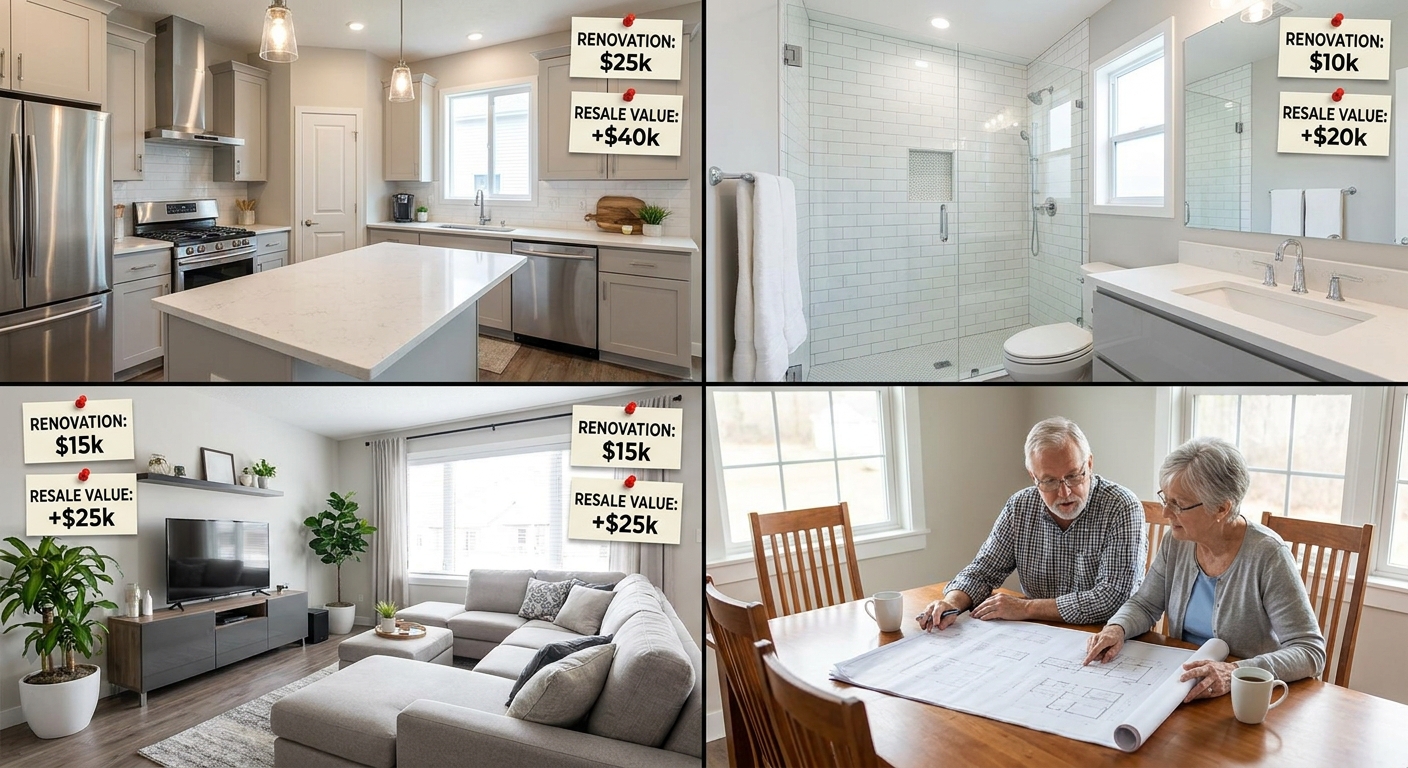
Typical Mid-Range Kitchen Remodel
Scope:
- Replace cabinets (semi-custom), counters (quartz or similar), sink, faucet
- New mid-range appliances
- New flooring and lighting
Cost range: $30,000–$65,000 depending on size and region.
Example (medium-size kitchen):
- Cabinets & countertops: $22,000
- Appliances (fridge, range, dishwasher, hood): $6,500
- Flooring & backsplash: $4,500
- Electrical & lighting: $3,000
- Paint & finish carpentry: $2,000
- Contingency (10%): $3,800
- Total: $41,800
Estimated value added (for a dated but functional kitchen):
- Increase in value: $25,000–$35,000
ROI range: roughly 60–85% on resale value alone, higher if it improves sale speed.
Kitchen Renovation Checklist
- [ ] Match finish level to neighborhood norms, not luxury magazines.
- [ ] Avoid heavy structural changes unless necessary (moving walls or plumbing adds cost fast).
- [ ] Choose durable, widely appealing finishes (simple cabinet profiles, neutral counters).
- [ ] Keep appliances consistent in finish and quality level.
- [ ] Include task lighting under cabinets and adequate general lighting.
Common Mistakes
- Overspending on luxury finishes in a modest area.
- Reconfiguring layout without clear functional gains.
- Eliminating too much storage for aesthetics.
Bathrooms: Small Spaces, Reliable Returns
Typical Hall Bathroom Update
Scope:
- Replace tub/shower surround, vanity, toilet, tile, lighting, and fixtures.
Cost range: $12,000–$25,000.
Example:
- Tub/shower & tile: $6,000
- Vanity & countertop: $2,500
- Toilet & plumbing: $1,500
- Flooring: $1,200
- Lighting & mirror: $800
- Paint & misc.: $700
- Contingency (15%): $1,900
- Total: $14,600
Estimated value added:
- Increase in value: $10,000–$15,000
ROI range: about 70–100%, with strong impact on buyer perception.
Primary Bathroom Upgrade
Costs vary more widely: $20,000–$60,000+.
Higher-end features (dual sinks, large shower, radiant heat flooring) often appeal to buyers but rarely return 100% of cost unless the starting bath was very outdated.
Bathroom Renovation Checklist
- [ ] Fix moisture issues and ventilation first (fan or window).
- [ ] Prioritize practical layout: adequate counter space, shower size.
- [ ] Use non-slip flooring and quality waterproofing behind tile.
- [ ] Keep plumbing in existing locations if possible.
- [ ] Choose simple, timeless fixtures.
Living Areas: Paint, Floors, and Light Over Major Rebuilds
Whole-House Cosmetic Refresh
Scope:
- Interior paint, flooring updates, basic lighting upgrades.
Typical costs (1,800–2,200 sq ft home):
- Interior painting: $6,000–$10,000
- Flooring (LVP or mid-range wood, installed): $12,000–$20,000
- Lighting and electrical updates: $2,000–$5,000
- Total: around $20,000–$35,000
Estimated value added:
- Increase: $15,000–$30,000, plus faster sale and more offers.
ROI range: typically 60–90% in resale value, with substantial marketing benefits.
Checklist for Living Spaces
- [ ] Neutral wall colors (light warm or cool neutrals).
- [ ] Quality, durable flooring suitable for local climate.
- [ ] Adequate overhead or layered lighting (ceiling + lamps).
- [ ] Repair cracks, nail pops, trim damage before paint.
- [ ] Avoid built-ins so specific that they limit furniture placement.
Bedrooms: Modest Investment, Modest Value Gain
Bedrooms rarely justify major spending unless you are adding a bedroom, which can significantly increase value.
Typical Updates
- Paint, carpet or flooring, closet systems, basic lighting.
Cost: $1,500–$4,000 per bedroom.
Estimated value added: often close to cost, depending on starting condition.
Adding a Bedroom
Converting a den or unfinished attic to a code-compliant bedroom can be powerful.
Example:
- Converting finished den to bedroom (add closet, egress window, door): $8,000–$15,000
- If this turns a 2-bed into a 3-bed home in a family-heavy neighborhood, value might rise $25,000–$40,000, depending on local pricing.
ROI: can exceed 150% when it changes how your home is categorized in listings.
Checklist
- [ ] Verify building code requirements (egress, ceiling height).
- [ ] Ensure new bedroom has heating/cooling.
- [ ] Keep finishes consistent with the rest of the home.
Exterior: Curb Appeal and First Impressions
Typical Exterior Improvements
- Paint or siding refresh
- Front door replacement
- Basic landscaping (mulch, plants, lawn repair)
- Garage door replacement
Example (mid-range):
- Exterior paint: $6,500
- Front door upgrade: $1,200
- Landscaping refresh: $2,500
- Garage door replacement: $1,800
- Total: $12,000
Estimated value added:
- Increase in value: $10,000–$18,000
ROI range: often 80–120%, especially in competitive markets.
Checklist
- [ ] Repair damaged siding, trim, and gutters first.
- [ ] Choose a neutral main color with a simple, appealing accent door color.
- [ ] Prioritize low-maintenance landscaping.
- [ ] Ensure house numbers and lighting are visible and modern.
Basements and Attics: High Potential, High Complexity
Finished spaces below or above the main living area can add significant usable square footage.
Basement Finish Example
- Semi-finished basement to fully finished family room and office.
Costs: $40,000–$80,000 depending on waterproofing, egress, and finishes.
Example:
- Framing, insulation, drywall: $18,000
- Electrical & lighting: $4,500
- Flooring: $5,000
- HVAC adjustments: $3,000
- Egress window (if needed): $4,500
- Bathroom rough-in & finishes (optional): $12,000
- Contingency (15%): $7,200
- Total: $54,200
Estimated value added:
- Increase in value: $35,000–$50,000, depending on how finished basements are valued in your area.
ROI: often around 65–90%, with major lifestyle benefits.
Attic Conversion Example
Converting an unfinished attic to a bedroom or office with a bath can run $60,000–$120,000. Returns depend heavily on local buyer demand and whether the space counts as official living area.
Checklist for Basements/Attics
- [ ] Resolve moisture and insulation issues first.
- [ ] Verify code requirements (ceiling height, stairs, egress).
- [ ] Understand whether added space will be counted as official square footage.
- [ ] Choose durable, moisture-resistant finishes for basements.
Systems and Invisible Upgrades: Value Protection
Upgrades like roofs, wiring, plumbing, and HVAC often don’t dramatically increase appraised value on their own but protect value and reduce risk.
Example: Roof Replacement
- Cost: $10,000–$20,000
- Value added: may only be $5,000–$10,000 in appraisals, but can prevent much larger losses from leaks and buyer objections.
Example: HVAC Replacement
- Cost: $7,000–$15,000
- Value added: partial, but improves comfort and saleability.
These are often non-optional from a maintenance and safety standpoint, and should usually take priority over cosmetic projects.
Putting It Together: A Sample $60,000 Renovation Plan
You have a 3-bed, 2-bath home worth $380,000 and a budget of $60,000. You plan to sell in 3–5 years.
A balanced, value-conscious plan might be:
- Kitchen refresh (not full gut): $25,000
- Hall bath update: $12,000
- Whole-house paint & lighting: $10,000
- Exterior curb appeal upgrades: $8,000
- Contingency: $5,000
Total: $60,000.
Reasonable estimate of value added:
- Kitchen: +$18,000
- Bath: +$10,000
- Paint & lighting: +$10,000
- Exterior: +$10,000
- Total: +$48,000
New estimated value: $428,000.
ROI: 48,000 ÷ 60,000 ≈ 80%, plus higher buyer interest and faster sale.
Quick Decision Checklist by Room
When deciding on a project, ask:
Kitchen/Bath
- [ ] Is the current space significantly below neighborhood standard? - [ ] Can I update layout minimally and focus on surfaces?
Living Areas/Bedrooms
- [ ] Can paint, lighting, and flooring solve 80% of the problem? - [ ] Will this change how the home is listed (e.g., 2-bed to 3-bed)?
Exterior
- [ ] Does the home look neglected from the street? - [ ] Are there simple fixes (paint, door, plants) that make a big difference?
Systems
- [ ] Are there safety or end-of-life issues (roof, wiring, plumbing, HVAC)? - [ ] Should these be handled before cosmetic work?
Using this room-by-room lens helps you allocate renovation dollars to areas with the highest combined impact on value, functionality, and buyer appeal, rather than chasing trends or one dramatic upgrade.