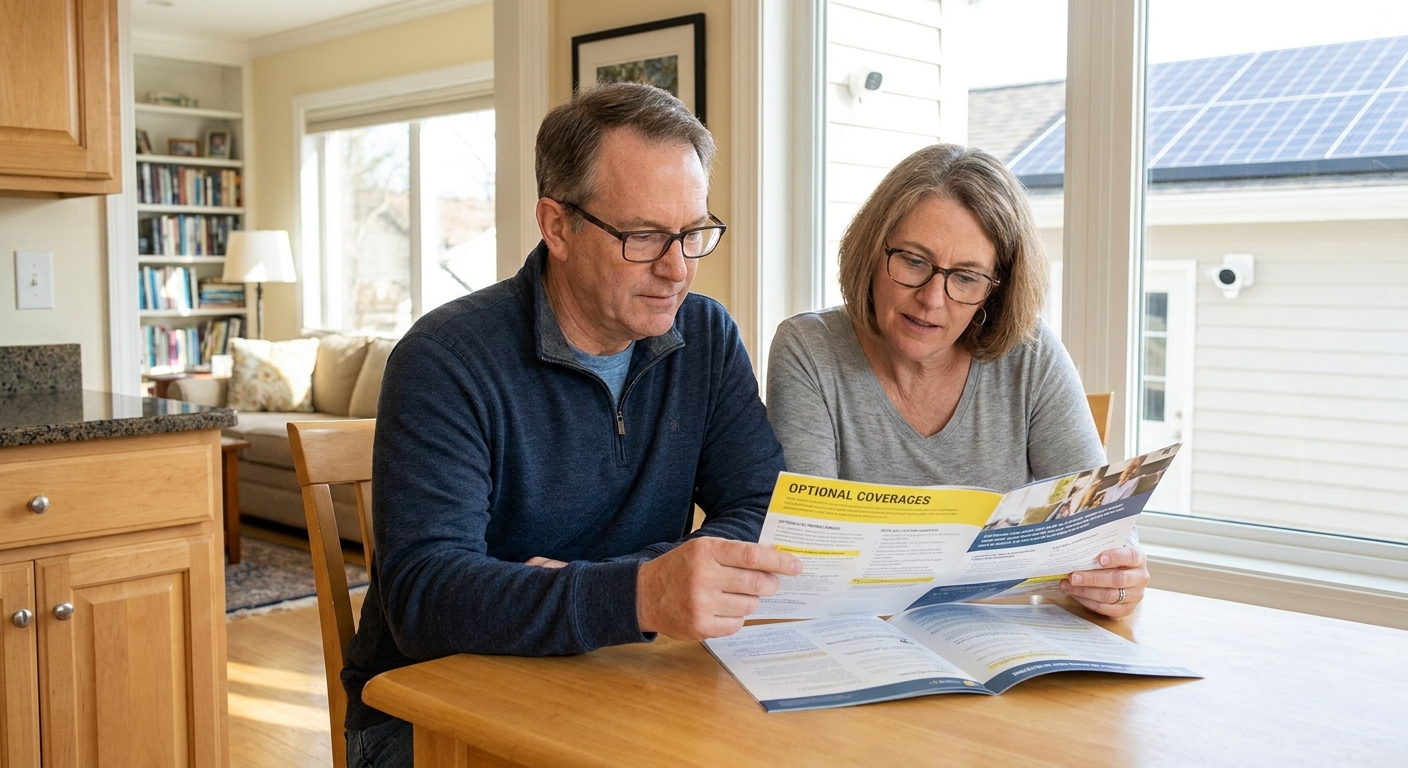
For many first-time buyers, home insurance appears late in the process—often as a rushed requirement from the lender. Handling it methodically instead can protect your new home and prevent closing delays.
Where Home Insurance Fits in the Buying Timeline
This guide follows a typical purchase step-by-step, focusing on what to do, when, with checklists and realistic cost examples.
Step 1: Right After Your Offer Is Accepted
Your purchase agreement is signed. Now what?
Action items in this phase:
- [ ] Collect property details: year built, square footage, roof age, mechanical updates.
- [ ] Ask the seller (via your agent) for recent insurance claim history on the property, if available in your region.
- [ ] Note any special features (finished basement, wood stove, pool, solar panels) that can affect coverage or price.
Why now?
Most lenders require proof of insurance (sometimes called a binder or certificate of insurance) at least a few days before closing. Shopping early avoids last-minute issues.
Step 2: Estimating Your Rebuild Cost, Not Just Price
You might be buying the home for $420,000, but that’s not what you insure. You insure the cost to rebuild.
Example
- Purchase price: $420,000
- Land value (non-insurable): ~$90,000
- Estimated rebuild cost (house only): $340,000–$360,000 (varies by market)
Insurers often use their own replacement-cost calculators. You can:
- Ask your agent to explain how they arrived at the dwelling limit.
- Compare between insurers; if one proposes $300,000 and another $360,000 for the same home, inquire about the difference.
Target: Dwelling limit close to estimated rebuild cost, with extended replacement if affordable.
Step 3: Requesting and Comparing Quotes
Request quotes from at least three insurers or intermediaries, providing the same details each time.
When you get a quote, record the key numbers:
| Item | Insurer 1 | Insurer 2 | Insurer 3 |
|---|---|---|---|
| Dwelling limit | |||
| Personal property | |||
| Liability | |||
| Deductible (all perils) | |||
| Wind/hail deductible | |||
| Valuation (ACV vs RCV) | |||
| Endorsements included | |||
| Annual premium |
Aim to standardize:
- Dwelling within a reasonable range based on rebuild cost.
- Liability at least $300,000 for each quote.
- Deductibles as similar as possible.
Step 4: How Insurance Affects Your Closing Costs and Monthly Payment
Home insurance shows up in two places: upfront at closing and as part of your monthly housing cost via escrow.
Example Purchase
- Home price: $420,000
- Down payment: 5% = $21,000
- Loan amount: $399,000
- Interest rate: 6.25% fixed, 30 years
- Property tax: $5,400/year (~$450/month)
- Estimated insurance: $1,950/year (~$163/month)
Monthly principal & interest (P&I) at 6.25% on $399,000: ≈ $2,460
Monthly tax: $450
Monthly insurance (escrowed): $163
Total estimated monthly payment:
$2,460 + $450 + $163 = $3,073
At Closing
Lenders often collect 2–3 months of insurance premiums upfront for the escrow account.
- Annual premium: $1,950
- Monthly equivalent: $162.50
- Escrow cushion collected: 3 months ≈ $488
You may also pay the first year’s premium at or before closing, depending on your lender’s process.
So, insurance-related funds at closing may include:
- First year’s premium: ~$1,950
- Escrow cushion: ~$488
- Total: ~$2,438, part of your overall closing costs.
Step 5: Choosing Deductibles Wisely
Deductibles significantly affect premiums.
Sample Options for Your $1,950 Baseline Quote
- $1,000 deductible: Premium $2,150/year
- $2,000 deductible: Premium $1,950/year
- $3,000 deductible: Premium $1,820/year
Tradeoff Example (10-year horizon)
Assume you have one claim in 10 years:
- With $1,000 deductible: You pay $1,000 on the claim + 10 years of higher premiums (10 × $200 more than the $2,000 deductible) = $3,000 extra over 10 years.
- With $2,000 deductible: You pay $2,000 on the claim. Premium is baseline.
- With $3,000 deductible: You pay $3,000 on the claim, but save $130/year × 10 = $1,300 in premiums.
If you’re comfortable with some risk, $2,000 often balances affordability and protection for first-time buyers. The best choice depends on your cash reserves.
Step 6: Confirming Coverage Before Closing
When you decide on a policy:
- [ ] Verify the effective date matches or precedes your closing date.
- [ ] Confirm your lender’s name and address are correctly listed as mortgagee.
- [ ] Ensure the dwelling coverage, deductible, and liability limits match what you agreed to.
- [ ] Get a binder or declaration page and send it to your lender and closing agent.
Delays in proof of insurance can delay closing; finalize this at least 5–7 days before your scheduled date when possible.
Step 7: After Move-In—Avoid Common Mistakes
Once you own the home, a few recurring issues can create gaps.
Mistake 1: Not Updating After Renovations
If you add a $40,000 finished basement or a $30,000 kitchen remodel, your rebuild cost increases.
Action:
- [ ] Notify your insurer after major work is done.
- [ ] Confirm whether your dwelling limit still covers the new features and if new perils (e.g., finished basement + sump pump) require endorsements.
Mistake 2: Underinsuring Personal Property
First-time buyers often accumulate furniture and electronics quickly.
Action:
- [ ] Create a simple home inventory: photos or videos of each room, plus receipts for big items (store them in the cloud).
- [ ] Check your personal property limit; consider raising it if your belongings grow significantly.
Mistake 3: Ignoring Exclusions
Standard policies usually do not cover:
- Flooding from rising water outside the home.
- Earthquakes.
- Routine wear and tear.
If you live near a river or in a seismic zone, research separate flood or earthquake policies.
Final Home Insurance Checklist for First-Time Buyers
Before choosing a policy
- [ ] Confirm dwelling limit ≈ rebuild cost (not purchase price).
- [ ] Choose liability of at least $300,000; more if affordable.
- [ ] Decide between ACV and RCV for contents (RCV preferred if budget allows).
- [ ] Choose a deductible that fits your savings.
- [ ] Understand key exclusions (especially water-related).
- [ ] Gather 2–3 comparable quotes for the same coverage levels.
Before closing
- [ ] Ensure policy effective date covers the closing date.
- [ ] Provide binder / declaration page to your lender and closing agent.
- [ ] Confirm insurance is included correctly in your escrow estimates.
After move-in (within 60 days)
- [ ] Create a basic household inventory.
- [ ] Store your policy documents and agent/insurer contact info where you can find them quickly.
- [ ] Schedule a policy review annually or after major changes.
Handled step by step, home insurance becomes a predictable, manageable part of buying your first home—not a last-minute surprise.